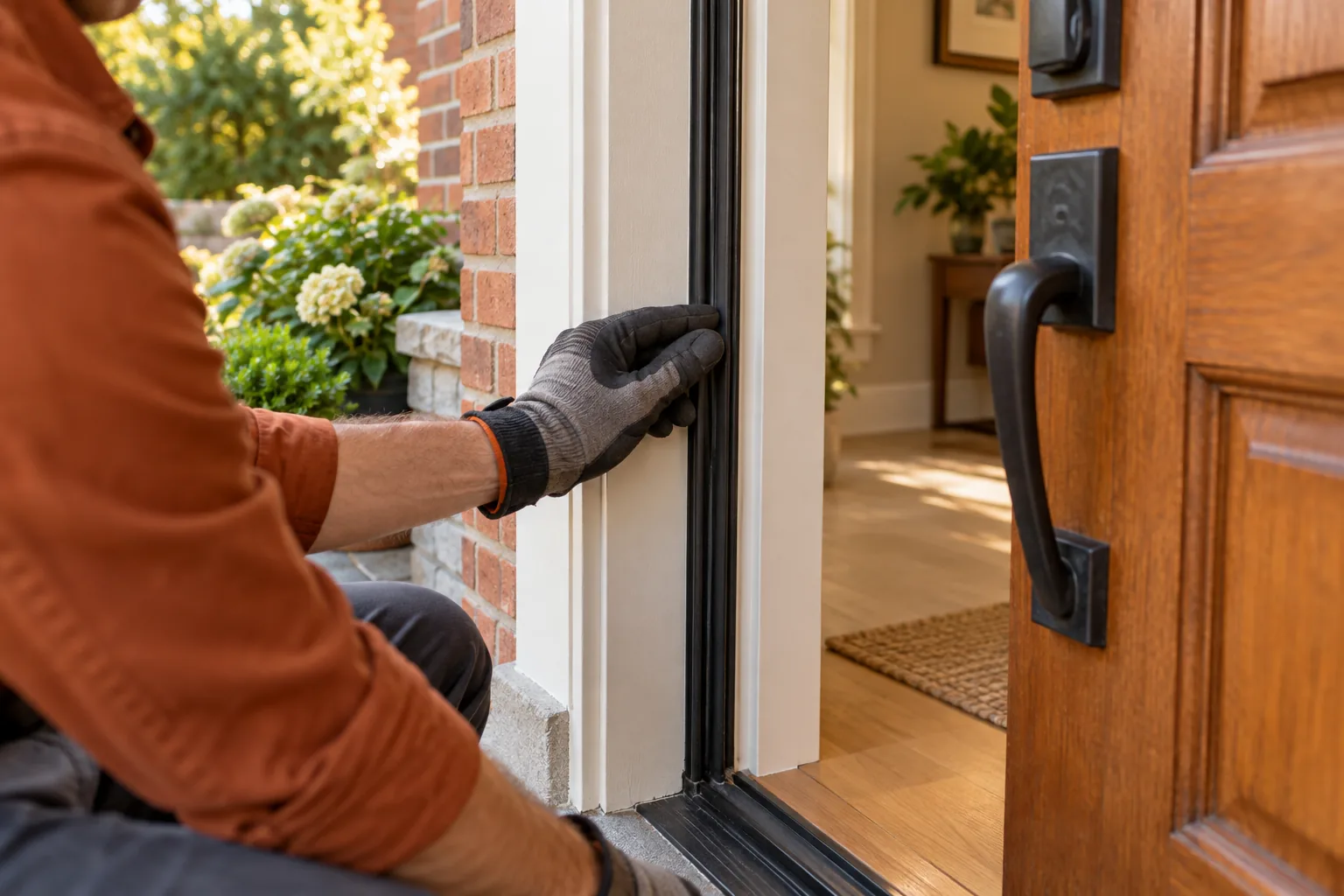
A cold patch beside the front door can make a replacement look like the obvious next purchase. Before choosing a new door, write down what actually happens: air moving past the latch, a gap at the bottom, or a room that feels cold without an obvious draught. Those observations make a much better starting point than “the entrance is freezing.”
Find where the air gets in
Natural Resources Canada identifies door frames and thresholds among the places to investigate for air leakage. Its guidance also explains that finding leaks is easier in cold, windy conditions. Check the accessible perimeter without taking anything apart, and note the location rather than assuming the entire door is defective. [1]
Try describing the pattern: does it happen with the door fully latched? At one edge or around the whole frame? Only in wind? Photograph damaged seals and any visible staining. This is an observation exercise, not a reason to run a homemade pressure test or disturb electrical fittings.
Match the material to the joint
Two jobs that look similar need different materials. NRCan describes caulking, tapes, and gaskets for joints between materials that do not move, while weatherstripping is used where parts must move, including operable windows and doors. A continuous bead of caulk is therefore not a substitute for a functioning door seal. [2]
Before buying a replacement strip, note the existing profile and how the door closes. Ask whether the proposed product fits the opening and still allows the door to latch normally. A thicker strip that stops the door closing properly has not fixed anything.
Keep the repair question separate from the replacement question
If the door rubs, will not latch, or has soft or stained material nearby, include that in the assessment. Ask what needs attention before a new seal is selected. Request separate explanations for a seal repair and a full replacement, including what each option would leave unresolved.
A whole-house draught problem also deserves a wider look. NRCan notes that comprehensive air sealing affects humidity, ventilation, and combustion-air supply. An energy advisor or air-sealing specialist can assess the house as a system before every visible gap is sealed. [1]
What to send with an enquiry
- A photograph of the full door and a close-up of the problem edge.
- Where you feel moving air and when it is noticeable.
- Whether the door closes and latches without force.
- Any water staining, damaged finishes, or previous repair attempts.
A useful brief could be: “Cold air comes past the latch edge on windy days. The door still closes normally. Please assess the fit and seal before recommending a replacement.” That gives the assessment a clear question to answer.